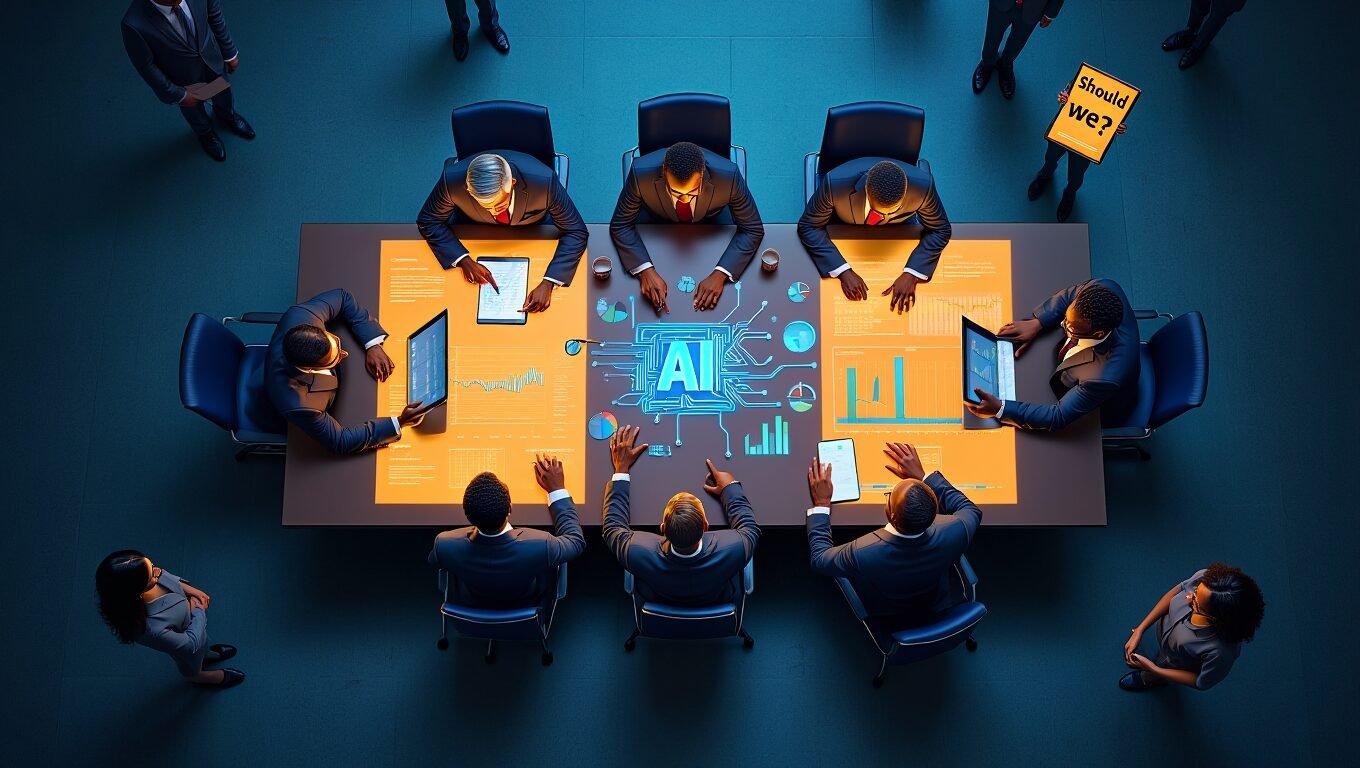
The question nobody’s asking: should we be doing this at all?
We keep building AI systems without asking if we should. After 40 years in digital transformation, I’ve seen what happens when moral questions get parked.
Workplace Insights by Adrie van der Luijt
We keep building AI systems without asking if we should. After 40 years in digital transformation, I’ve seen what happens when moral questions get parked.

Tech companies blame AI for layoffs, but the real culprit is reckless overspending on infrastructure. Why this pattern matters for everyone, not just tech workers.

Scientists challenge von der Leyen’s AI claims as leaders from Brussels to Westminster bet public services on marketing hype rather than evidence. What’s being lost whilst billions flow to private contractors?

A Perkonomics report reveals that whilst 69% of employers think AI is improving employee experience, only 38% of workers feel more valued by it. With workplace disengagement at high levels, is it any wonder the systems make users feel the same?

New data reveals the UK government has spent £3.35bn on AI since 2018, with the Met Office getting £1bn for weather forecasting whilst the departments serving vulnerable people, Treasury and DWP, sit in the bottom three. The spending patterns tell us everything about whose problems we think AI should solve.

After delivering a keynote on trauma-informed content design and reflecting on government’s AI ambitions for grant management, I’m troubled by the gap between efficiency promises and vulnerability realities. Most people using public services are in crisis. If our AI can’t recognise that, we’re building expensive barriers, not solutions.

Tony Blair says AI in public services will revolutionise government. But Adrie van der Luijt has heard it all before and warns that without investment in people, tools and trauma-informed practice, nothing will change.

The Public Design Evidence Review sets out to define the future of design in public services, but leaves out the emotional and psychological realities of its users. In a post-lockdown world where cognitive overload is rising and trust is falling, trauma-informed design isn’t a luxury. It’s a baseline.